Disability Rights on a Global Stage
May 20, 2025
Disability Rights on a Global Stage
My student experience at an international conference on disability-inclusive policy at the UN in Vienna, Austria.
– By Alexandra Crooks Moreno, ’26
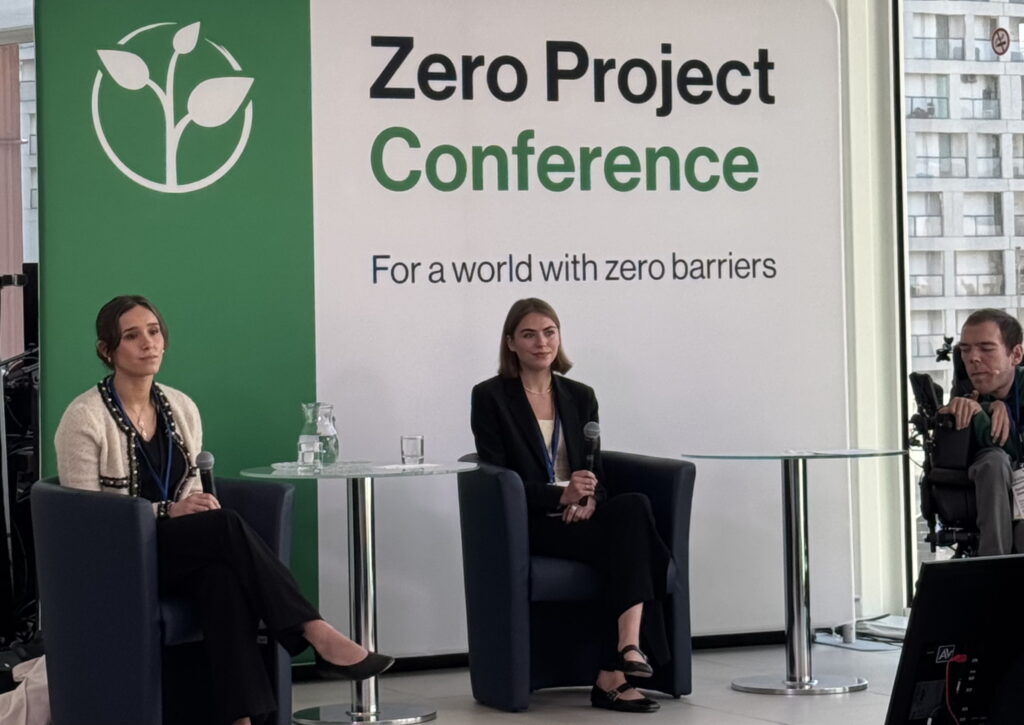
Early this spring, my fellow student Alice Bruil and I spoke at the Zero Project Conference—an annual global convening dedicated to advancing disability inclusion through innovation. Held at the United Nations Office in Vienna, the 2025 conference (#ZeroCon25) brought together over 1,000 participants from more than 90 countries, with this year’s focus on cutting-edge solutions for Employment and Information & Communication Technology (ICT).
The experience was profoundly transformative. I left with a renewed sense of purpose and a deeper connection to the global community—motivated to pursue work that has international relevance and impact.
GETTING THE CALL
Alice and I were invited to present about our experiences conducting disability rights research by Robin Tim Weiss, Director of International Affairs for the Zero Project, who was intrigued by findings we’d presented earlier that year, at the Conference of States Parties to the CRPD (COSP17) in New York.
We conducted research on disability-inclusive development in 5 countries–including the U.S.–through our work with the Disability Inclusive Development Initiative under the mentorship of Megan McCloskey. The Disability Inclusive Development Initiative (DIDI) works to promote the full realization of the human rights of persons with disabilities. It is a multi-disciplinary research and advocacy project that seeks to leverage the rigor of academic scholarship to offer meaningful and practical support to development and rights practitioners in the field. Our most recent project examined how countries’ asylum procedures protect refugees with disabilities.
Professor McCloskey introduced me to DIDI while I was in her Honors seminar: “International Human Rights Advocacy.” As a public health student, I have always taken a holistic perspective to addressing health equity, seeking to examine barriers upstream that contribute to disparate outcomes. The course material really aligned with my desire to ensure inclusive access to sustainable livelihoods for individuals with disabilities, and I mentioned this to Professor McCloskey one day after class. Professor McCloskey connected me to her research team—something I may never have known about if I hadn’t spoken up.
Sharing this story with world leaders in disability rights was a once-in-a-lifetime opportunity that I prioritized: relying on my community to help me prepare the presentation and find resources to attend the conference. UW Undergraduate Conference Travel Awards helped to fund our international travel. I also secured a grant through the Sisterhood Initiative—a student organization dedicated to supporting the academic and personal growth of women of color—which further supported my participation.
BEING THERE
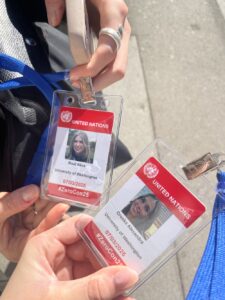
Alice and I spent one week in Vienna—an unforgettable and deeply meaningful experience. At the conference, we used the built-in networking tools to connect with leading professionals in the field, including Christopher Patnoe, Head of Accessibility and Disability Inclusion for EMEA at Google. I attended a wide range of sessions that deepened my understanding of how global leaders are addressing disability inclusion through policy, innovation, and collaboration.
Watch the video of Alexandra and Alice at Zero Project Conference
I learned an incredible amount about how things are, where they are headed, and what some of the best outcomes might be with enough policy-makers prioritizing the right things. Here are some of the key takeaways I’m bringing forward—both personally and as a member of the DIDI research team:
- Technology and AI must be designed with accessibility from the start. Shift left” strategies and AI systems trained on data that reflects the lived experiences of persons with disabilities can help to avoid systemic bias.
- Disability inclusion is good business. Universal design benefits everyone, not just persons with disabilities, and strengthens organizational resilience. Companies that invest in accessibility outperform their peers in innovation, revenue, and employee satisfaction.
- Disabled People’s Organizations (DPOs) are essential facilitators. DPOs play a vital role in community organizing, policy influence, and skills development. Youth-led and women-led DPOs are especially important for advancing equity and long-term inclusion.
- Global momentum exists—but collaboration is critical. From Singapore to Spain, international efforts are accelerating—but fragmented systems and definitions create barriers. Shared standards and joint action across borders are necessary to ensure progress is consistent and equitable.
DO WHAT MATTERS TODAY
I am excited to apply these lessons in my continuing work as a Data Intern at the Seattle City Attorney’s Office, where I support public transparency initiatives and apply data-driven methods to advance evidence-based policy. This was my first trip to Europe, so I also hope to travel abroad again in the coming year to deepen my understanding of global legal systems and grow my capacity to contribute to inclusive, internationally informed policy reform. When asked what advice I would give to students who want to make an impact while still earning your undergraduate degree, I can only speak from my own experience. Here are a few things I recommend:
- Speak up. You never know when a seemingly trivial conversation will lead to something meaningful that you might never have expected.
- Meet with your advisors regularly.They can help you discover and navigate opportunities you might not find on your own.
- Invest in micro-learning.
- Listen to podcasts
- Read thought-provoking books
- Watch TED Talks and lectures outside your major
Being part of the Interdisciplinary Honors Program has shown me the value of engaging with topics that genuinely interest you and following up when something stands out. For other Honors students, I’d say: pay attention to what you enjoy learning about, and don’t hesitate to ask questions or express interest. At a large institution like the UW, there are a lot of opportunities, but it often takes initiative to find them.
And, of course, I encourage students to explore the work being done by the Disability Inclusive Development Initiative (DIDI) here at UW.
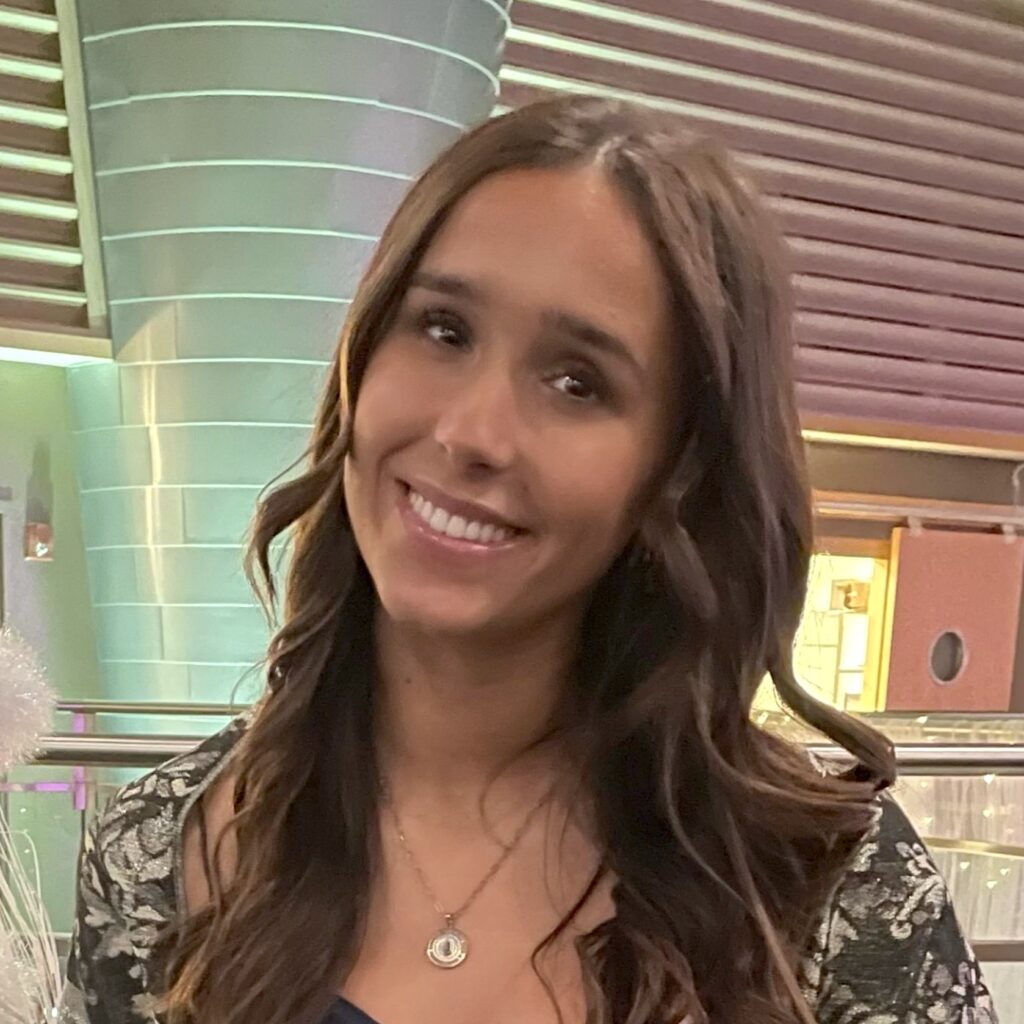
About the author: Alexandra Crooks-Moreno is a junior pre-law student, pursuing a BA in Public Health – Global Health, with College Honors, and a minor in Law, Societies, and Justice. She plans to graduate in June 2026. Alexandra is a part of UW’s first cohort of the Sisterhood Initiative, and currently serves as a peer mentor to promote leadership, identity, and career development among this vibrant community for Women of Color through an intersectional approach. She is also a member of UW’s WE Lead, a program for the most highly engaged entrepreneurial student leaders on campus. Her passion is rooted in medical innovation, transparency, and promoting equitable access for historically disadvantaged groups. Alexandra aspires to merge this commitment through a career in Healthcare Law.