LOVEWORK builds resilience
April 30, 2025
LOVEWORK builds resilience
At the University of Washington, a unique course is turning traditional academic boundaries on their head—and striking a deep emotional chord with students. Nestled within the UW’s Interdisciplinary Honors Program, LOVEWORK: an unfinished syllabus invites students to explore one of life’s most complex and essential questions: how do we love well, starting with ourselves?
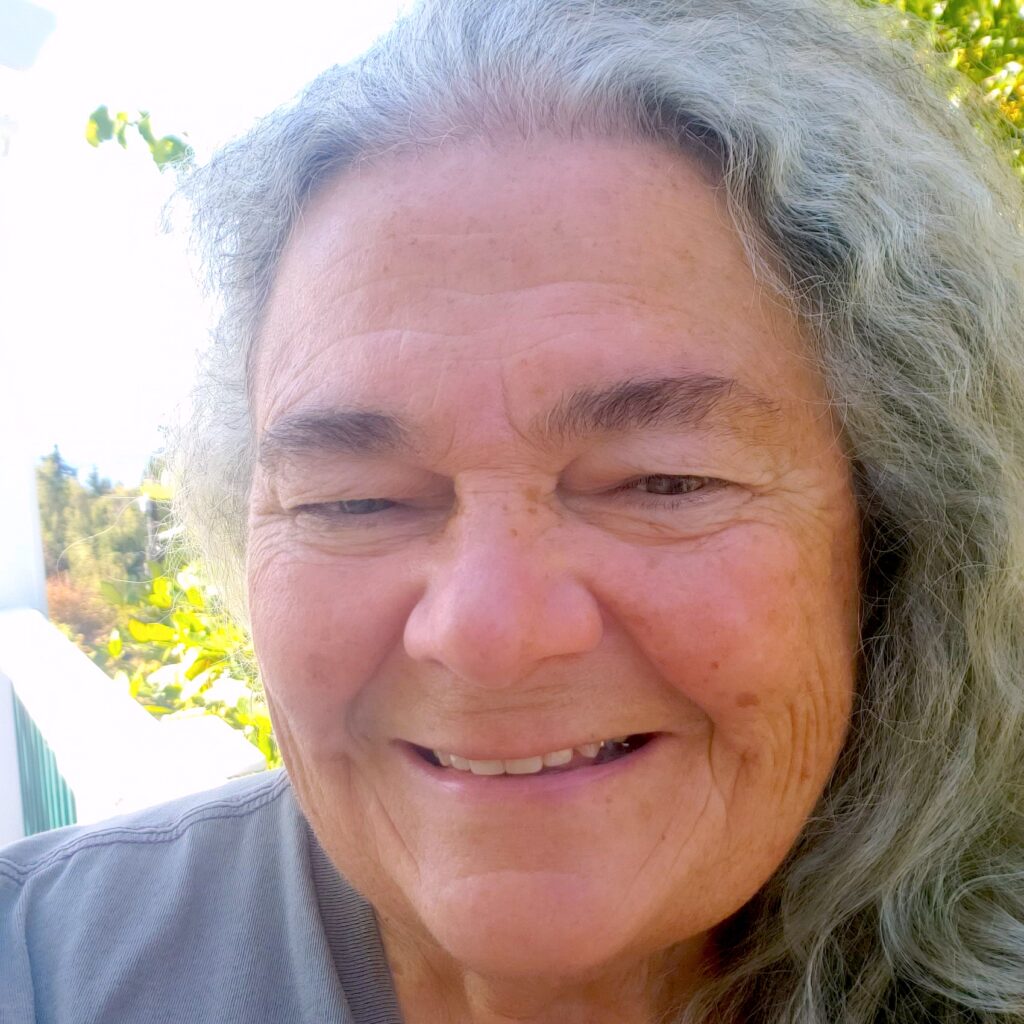
UW professor Jeanette Bushnell (Comparative History of Ideas, Gender, Women & Sexuality Studies), continually evolves the class (now in its ninth generation) to be “an intervention into contemporary practices to help us understand our connections and relationships.”
Bushnell’s Anishanaabe heritage has often informed her teaching and scholarship, and this course is no exception: “Within an indigenous pedagogical format, this interactive class is a space to do lovework. We ponder and attempt to perceive how love is incorporated into our daily lives as students, scholars, workers, families, and active members of both human people communities and more-than-human communities. We critically engage with notions of love, where our understandings of love came from, and how we can proceed with a love consciousness and a love ethic.”
Bushnell assigns reading, writing, making and reflecting exercises and invites a host of guest speakers (mostly UW alumni) to enrich the perspectives centered in the class. I sat in on a recent visit by alumna Olivia de Recat, a cartoonist and writer most known for her contributions to The New Yorker and for the viral-hit illustration “Closeness Lines.” She’s recently published Drawn Together: a collection of love stories, which is insanely cheap right now if ordered on the Hamilton Books website.
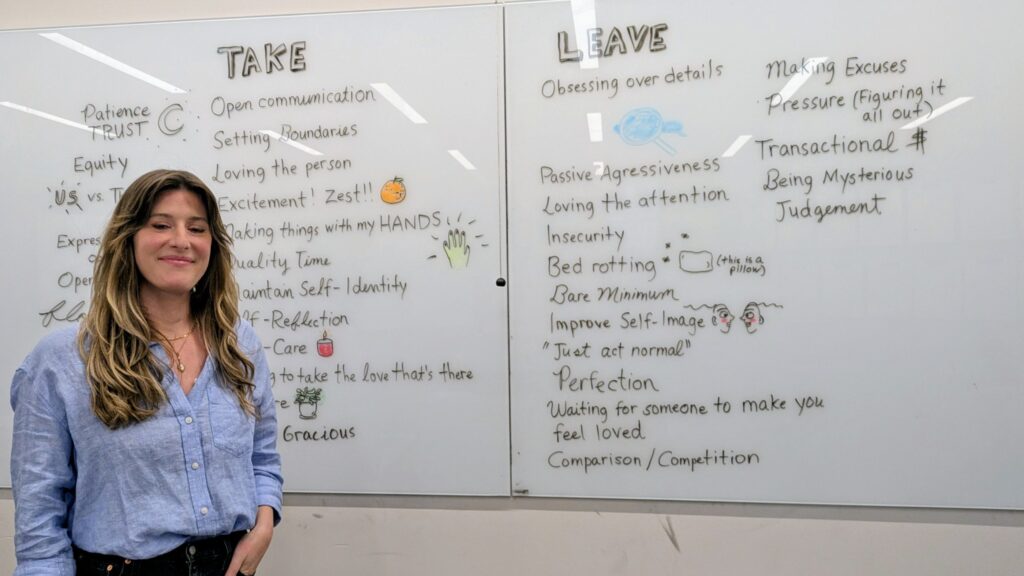
During her visit, de Recat shared excerpts from the book, including her “Take and Leave” list (Take: presence, Leave: avoidance/control)…a blueprint for her own version of a healthy relationship. Students created lists, which could be made with any relationship in mind, but overwhelmingly focused on the foundational “ship” of best loving your self. As students read their lists aloud—statements like “Take: self-reflection; Leave: perfection”—the class stirred with recognition and vulnerability. The conversation touched on how we show up in romantic love, self-love, friendships, family, society, and the ways we learn love early and then un-learn what isn’t working anymore.
As part of the UW Honors curriculum, which emphasizes learning across disciplines and identities, LOVEWORK doesn’t shy away from life’s messiness. It explores relationships as something we don’t arrive at fully formed, but evolve through—“you don’t need to be ‘ready’ for love to be in love,” one student reflected. Another added: “Being with someone is part of how we keep learning and growing.”
Sharing humor, wisdom, anxiety, kindness, curiosity through art is one way, the biggest way, de Recat shows love for the rest of humanity. Students wondered how she came to make a living through art, whether she prepared for it in college, and how to keep showing up when the world doesn’t seem to want what you have to offer.
When asked how she avoids creative burnout, de Recat replied: “I’m protecting drawing so there’s always something just for me…not for anyone else.” At the end of class, though, de Recat expanded on what she hopes students will take away from her visit “When you have an idea that’s nagging at you just make it or write it down. It’s something bigger than you that needs to get out. Get it out there. You have to be nice to your ideas…always have a home for them. Maybe a little notebook you carry around. And it’s okay to be afraid to share. Sometimes anxiety is pointing you in the right direction. Maybe do it anyway.”
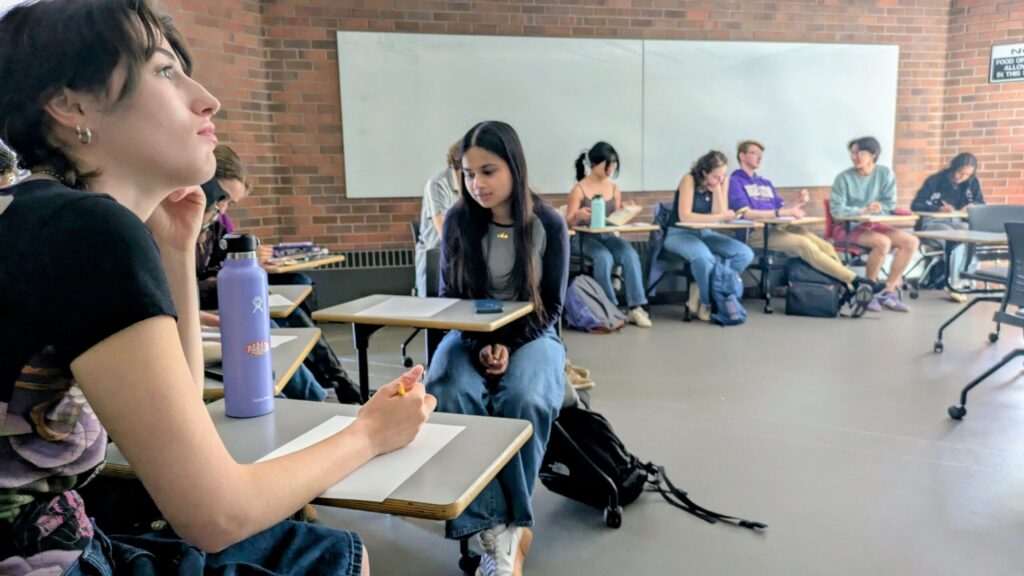
The week before de Recat’s visit, local artist Jen Moore led students through a healing sound bath, and future sessions promise similarly unexpected modes of emotional inquiry. This week, Gabriel Teodros visited to speak about gratitude. Civil engineer Violet Albright will speak on economic systems and James Lovell will speak on the place of love in history, in justice. The course is equal parts academic and personal, weaving together anthropology, psychology, art, and reflection. Students are guided not just to think critically, but to feel intentionally.
Honors student adviser, Anika Mehta, gushed about the LOVEWORK class, which she took earlier in her academic career: “It’s so beautiful…so good for you. I still think about it a lot. I wish I could take it every year.” LOVEWORK will be offered again in winter 2026, for students enrolled in the Interdisciplinary Honors Program.
Story by Carey Christie, UW Honors Program, 2025