In Spring, we have the opportunity to learn more about Honors students’ academic achievements through both Interdisciplinary Honors portfolio presentations and Honors students’ Undergraduate Research Symposium presentations. We hope you’ll enjoy taking a look at some examples of the outstanding work our students are producing.
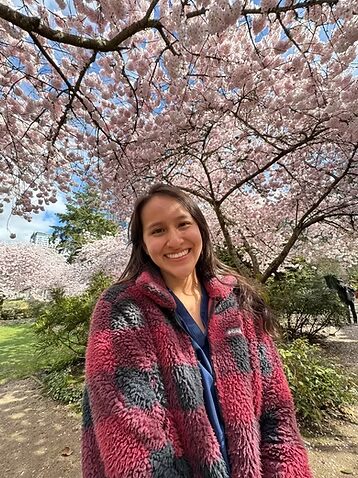
This site incorporates my Interdisciplinary Honors and Husky Leadership Portfolios which highlighting my undergraduate experiences at the University of Washington while completing a double degree in Medical Anthropology and Global Health (BA) and Biology (BS) with college honors. In my free time I enjoy committing to an old-lady lifestyle which includes reading books, cross-stitching, and visiting museums while never missing an episode of my favorite reality tv shows!
This portfolio is organized like a museum with each tab being an ‘exhibit’ that highlighting a key reflection of mine, to learn more about this organization read the Museum Map below. Please wander through at your own pace and thank you for joining me!
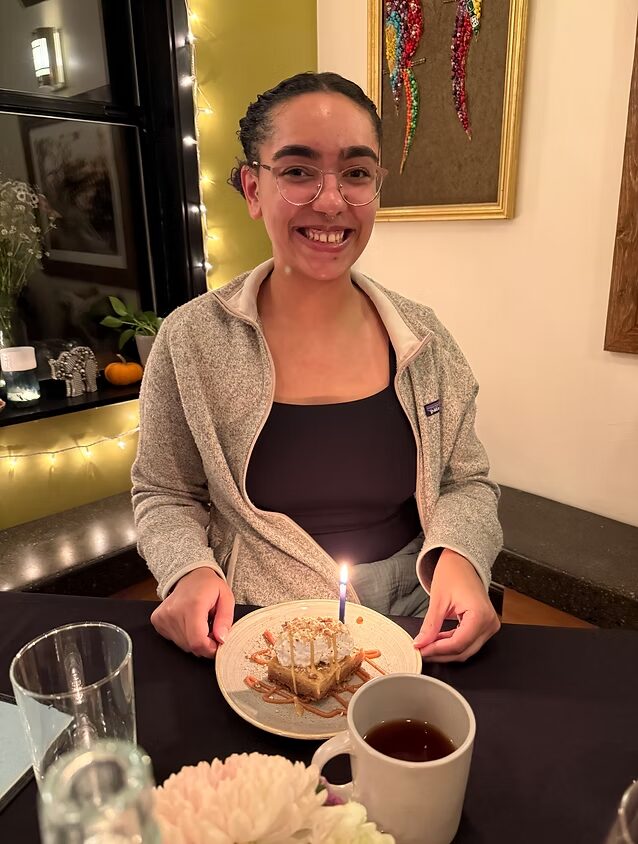
My name is Mariela Hernandez, and I am a third year student at the University of Washington in Seattle. I study General Biology with Interdisciplinary Honors. Throughout my honors portfolio, I collected artifacts, pictures, and memories from my undergraduate years. Feel free to look through my portfolio that details my UW experience!
This portfolio is the culmination of my four years at the University of Washington, and was created as a final project for my time in the Interdisciplinary Honors Program. Through this portfolio I chronicle the peaks and valleys of each quarter I have spent at the university (or abroad), and in doing so reflect on how I have evolved as a student, researcher, friend, and community member over this time period.
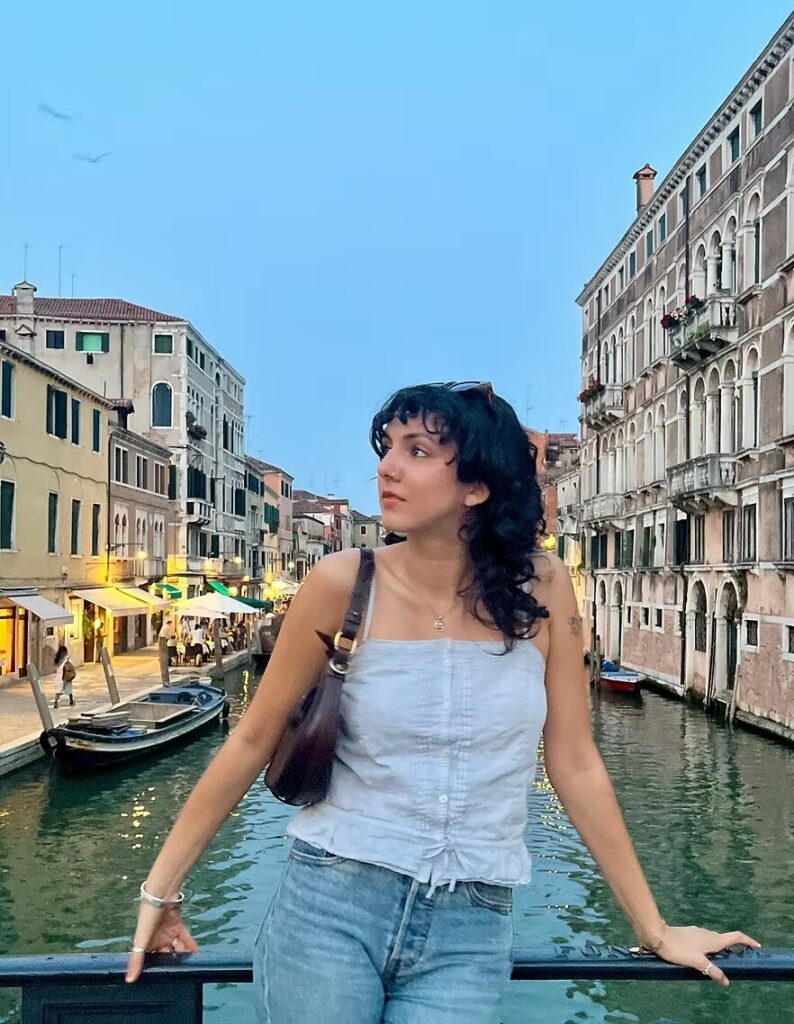
A little about me, I am graduating in March 2026 with a BA in Law, Societies & Justice and BA in International Studies with Interdisciplinary Honors. Originally from Evanston, Illinois, I chose to move to Seattle and attend UW largely because of my acceptance to the Interdisciplinary Honors Program. As a senior in high school I felt constrained by the idea of choosing a major, and loved the prospect of being able to continue to learn about topics outside of my intended area of study. I have been able to take advantage of so many incredible opportunities through Honors, from studying abroad in Peru to moderating the Honors program’s annual Global Challenges event. As I am now in my last quarter of my college experience, I feel immensely grateful to the folks in the Honors program for the way they have shaped me as a person. Enjoy my portfolio!
Research Abstracts:
Joey Arens – A Critical Queer-y Into the Capture of the LGBTQ+ Movement
Within the span of a century, homosexuals in the United States went from pathologized persons with “sociopathic personality disturbances” to revered as “strengthe[ning] the institution of marriage” by the nation’s highest court. This thesis – diverging from prototypical analyses that esteem the “glamorous” and meteoric rise of gay rights – reveals undemocratic normative, institutional, and material intra-movement power asymmetries that informed the movement’s trajectory alteration in its priorities, agenda, and tactics. The dearth of scholarship – failing to mend critical philanthropy studies with LGBTQ+ social movement history – permits the clandestine impacts of private foundations and institutional power asymmetries to be underexamined, thereby reifying the invisibilized omnipresence of force relations inherent in those social movements embedded in a capitalist substructure. This thesis deploys a multi-method approach, integrating quantitative financial data from grant-making foundations to LGBTQ+ causes with qualitative, critical “bottom-up” analysis, with foci on the covert vicissitudes of power archived in the Freedom to Marry Oral Histories and other primary sources. This thesis identifies and dissects three junctures of “movement capture.” The quintessential, conditional funding influxes predicated upon acquiescence to the funder’s priorities, which were substantially dictated by the Civil Marriage Collaborative (CMC), who bestowed the movement with nearly a third of the movement’s monetary budget attained from foundations ($393,138,889). Secondly, the CMC’s affixation to institutional nodes of power – particularly formal sociopolitical channels and the pre-existing sway of the Litigators Roundtable – which thereby bestowed a degree of legitimization for their demands at the expense of more liberatory avenues that reject the reification or replication of hegemonic power. And finally, the portrayal and “advertisement” of the(ir) movement to the public(s) that paradoxically occluded LGBTQ+ self-advocacy in the name of political expediency for gay rights. These findings give further credence that axiom that the revolution will not be funded in a climate of growing and violent wealth inequality.
Devyn Gilbert – A Tale of Two Billies: Non/Normative Masculinities in the Seattle Leather Community
Throughout the 1980s and 90s, perceptions of masculinity in the Seattle leather men community underwent various changes. My paper scrutinizes the reasons why masculine ideals expanded to be more inclusive of transgender male identities, but the same progress was not made with regard to Black men. The purpose of this project is to investigate and shed light on issues of discrimination against intersectional identities within marginalized communities. My thesis is that, in combination with political movements in the LGBTQ+ community, changes in leadership due to the AIDS epidemic made room for new forms of masculinity in the Seattle leather men community. However, those forms of masculinity were still largely normative and white. My project is a case study of two Seattle leather men with non-normative masculine identities, one from the 80s and the other from the 90s. Looking at primary sources in newspapers from the period regarding their experiences and events they were involved in, I compared the coverage of their lives and analyzed this data through the lens of erotic capital. My project found that greater willingness to discuss gender inequality than racial inequality, as well as nationwide transgender rights movements, resulted in an expanded definition of masculinity in the 1990s. This new masculinity included normative transgender male identities, but still unfairly discriminated against gay men of color. These findings are significant as they illuminate the history of racism and transphobia within the gay community that is still present today.